Schools
Colleges
Immersions
Certifications
Internships
About
School programme · HCD Institute, DIC Hub, IIT Hyderabad
Designing How the Next Generation Thinks.
HCD Lab @ School is a structured design thinking, critical thinking and innovation programme for Grades 6–12. Developed and implemented by HCD Institute, DIC Hub, IIT Hyderabad, the programme helps schools integrate experiential learning, research, prototyping and real-world problem-solving into their academic ecosystem.

Why schools choose HCD Lab
A structured institutional programme, not a one-off workshop.
HCD Lab becomes part of how your school teaches, every year, in every grade from 6 to 12.
- Academic differentiationA structured design and innovation programme that sets your school apart.
- NEP 2020 alignedExperiential and multidisciplinary learning, as NEP 2020 asks of every school.
- Thinking skillsCritical thinking, creativity and problem-solving, practised on real problems every year.
- Teacher capacityYour teachers train through the Faculty Training Programme and lead more of it each year.→
- Documented learningEvery student builds a portfolio, a design journal and project reports.
- Parent engagementStudent exhibitions and presentations show parents what their children can do.
- A culture of curiosityAn institutional habit of questioning, experimenting and innovating that lasts beyond any one year.
What your school receives
Everything needed to run it, year after year.
Curriculum
Structured Grades 6–12 curriculum
A seven-year progression with a new theme each year.
See the curriculumTeachers
Faculty Training Programme
Training for your teachers, so the programme grows inside your school.
About the FTPResources
Teaching and learning resources
Session plans, activity material and the course book for secondary students.
Students
Student design journals
A handwritten journal for every student, kept all year.
Documentation
Project templates
Templates for research, prototypes and project reports.
Assessment
Project assessments and juries
A classroom-project jury and a final jury each year, on a common rubric.
Certification
Two certificates per student
One issued by HCD Institute and one by DIC Hub, IIT Hyderabad, for every student who completes the year.
Exhibition
Annual student exhibition
An end-of-year display of the year's work, open to parents and guests.
Review
Academic reviews and mentorship
HCD Institute faculty mentor and review projects; DIC Hub, IIT Hyderabad experts join juries and the annual academic review.
What it is
A curriculum, two projects, two juries and a display. Every year.
The design thinking and entrepreneurship curriculum created by HCD Institute. A classroom project and a final project, each judged by a jury. An end-of-year display of everything students made. All on real problems from their own school and neighbourhood. The projects are where the thinking shows; the thinking is the point.
01
Find a problem
02
Research
03
Prototype
04
Test
05
Present


What you need
Use the rooms you already have.
A design lab is a way of working, not an expensive room.
You need
A room and simple materials
Any classroom or activity room · jute soft boards to pin up ideas · a blackboard · tables that can be moved together · paper, card, clay, toys and building blocks.
You don't need
New buildings or big budgets
No new construction · no costly machines · no separate equipment budget · no new hire. If you already have an Atal Tinkering Lab or makerspace, we use it too.

Why it matters
School teaches answers. This teaches questions.
Machines can now produce answers faster than any student. What they can't do is notice a problem nobody has named, ask a better question, or tell what they assume from what they actually know.
That's what HCD Lab @ School teaches. It's the hands-on, experiential learning NEP 2020 asks for, and the kind of learning the world's best schools are known for.
01
Think like a designer
People and systems first. Solutions second.
02
Question like a reader
Ask where a claim comes from before accepting it.
03
Test like a scientist
Every idea is a guess until it's tested.
04
Listen like a team
Hear people who see it differently. Change your mind on evidence.
Screens and AI
Mostly paper, people and making.
Students observe, talk, sketch and build by hand, and keep a handwritten design journal. Devices are used only to record work, and students don't need their own. AI is not used to produce answers: students explain their own reasoning to teachers and a jury.
Who teaches it
HCD Institute faculty begin it. Your teachers grow into it.
HCD Institute faculty and facilitators teach the curriculum. Your teachers co-teach from day one, train through the FTP and take on more each year. DIC Hub, IIT Hyderabad experts join the juries and the annual academic review.
01 · Begin
HCD Institute faculty teach
HCD Institute faculty and facilitators deliver the design thinking curriculum in your school: in your timetable (from 100 students), in a five-day block for each cohort, or at weekends and holidays.
02 · Co-teach
Your teachers alongside
Teachers sit in on every session, co-teach, support teams day to day and attend the Faculty Training Programme.
About the FTP03 · Grow and review
More of it each year
As your teachers gain confidence they lead more sessions. HCD Institute faculty review projects; DIC Hub, IIT Hyderabad experts join both juries and the annual academic review.
- Your teachers' roleCo-teach sessions, guide teams between faculty visits, keep design journals moving, and take part in juries and the exhibition.
How it fits your school
Three ways to run it. You choose.
HCD Institute faculty and facilitators teach the design thinking curriculum in one of three ways, and we set it up with your school around your academic calendar. After that, the year runs the same way for everyone: a classroom project, a jury, a final project, a final jury and an end-of-year display.
Option A
In your timetable
A few periods a month in each class, about four, through the year. HCD Institute faculty visit on a schedule agreed in the MoU, and your teachers carry the work between visits. Available when the programme covers 100 or more students.
Option B
A five-day block
Five continuous days with each cohort of 30, on your campus. It fits NEP 2020's ten bagless days for Grades 6–8, activity weeks or the days after exams.
Option C
Weekends and holidays
The same five days, run at weekends, in vacations or on holidays, whenever your school is ready to open with us.
| In your timetable | A five-day block | Weekends and holidays | |
|---|---|---|---|
| How it runs | About four periods a month, all year | Five continuous days per cohort | Five days over weekends or holidays |
| HCD Institute faculty | Scheduled visits, agreed in the MoU | On campus all five days | All five days, on agreed dates |
| Students needed | 100 or more | From one cohort of 30 | From one cohort of 30 |
| Pilot class | No | Yes | Yes |
| What the school provides | Periods in the timetable, a classroom and simple materials | Five days, a classroom and simple materials | A classroom on agreed weekend or holiday dates |
| Your teachers | Lead sessions between faculty visits | Sit in and co-teach all five days | Sit in and co-teach on the agreed days |
| Eligibility | Grades 6–12; cohorts of up to 30 | Grades 6–12; one cohort of about 30 | Grades 6–12; one cohort of about 30 |
- Where the time comes fromPeriods each class already has, bagless days, activity weeks, the days after exams, weekends and vacations. We plan it with your academic calendar.
- Why the timetable option needs 100 studentsFaculty travel to your school through the year. With enough classes, one visit reaches many of them, which keeps the programme sustainable. A first or pilot class runs as a five-day block.
- More days?The curriculum is built for five days per cohort. Extra days can be added under the MoU.
- Want to see it before you decide?Start with a 30-minute conversation. We walk your principal and teachers through how the year runs in your school, and answer every question before you sign anything.
- Your teachersThey sit in on every session, co-teach, guide teams between visits and join the juries, so your school can take on more of it each year.
- From pilot to the whole schoolStart with a pilot class of about 30 as a five-day block. After the pilot review, extend across grades; the timetable option opens from 100 students.
- Annual academic reviewAt the end of each year HCD Institute reviews student work, jury results and teacher progress with your leadership, with DIC Hub, IIT Hyderabad experts taking part, and plans the next year.
Inside a five-day block
One cohort, one room, all day.
In a five-day block or over weekends and holidays, a cohort of 30 works with HCD Institute faculty from morning to afternoon. Long, unbroken sessions let students finish a line of thinking instead of stopping when the bell rings.
01
Morning · Observe
Questions and field work in the school or neighbourhood.
02
Midday · Make sense
Findings go up on the soft boards. Teams look for the real problem.
03
Afternoon · Make and test
Simple models, tested with real people, then reviewed together.
04
After school · Teacher clinic
An hour with your teachers on what comes next.
In the timetable option, each class meets HCD Institute faculty in its own periods during each scheduled visit, and your teachers lead the sessions between visits. Larger schools run cohorts one after another, or side by side with more faculty. Students keep a daily Question Page throughout.
The year, step by step
One year. The curriculum, two projects, two juries, one display.
- Term 1 · Design thinking curriculumThe design thinking and entrepreneurship curriculum created by HCD Institute, taught by its faculty in your timetable (from 100 students), in a five-day block for each cohort, or at weekends and holidays.Term 1
- Term 2 · Classroom projectAbout 20 hours. Teams take a real problem from their school or community. It can be combined with the projects other subjects already set, so students do one richer project instead of two. HCD Institute faculty review the projects online at scheduled points agreed in the MoU.Reviews
- JuryEvery team presents the classroom project to HCD Institute faculty, DIC Hub, IIT Hyderabad experts and teachers, and leaves with clear direction for the final project.Jury
- Final projectThe best direction is taken further: tested again with users, refined and written up as a project report.Submission
- Final jury and displayAn end-of-year display of the curriculum work and the projects, the way design schools show their work: process walls, sketches, working prototypes, products and reports, open to parents, other schools and invited guests.Display
- After the juryEvery project is documented. A few may continue beyond the year with support from DIC Hub, IIT Hyderabad. Selection is competitive.Next
| Stage | What students do | The question |
|---|---|---|
| Foundations | Foundations: asking questions, observing, colour, form and function | Why does the question come before the build? |
| People | Understanding people: field research and empathy | Who am I designing for? |
| Problem | Framing the problem and generating ideas | What is the real problem? |
| Prototype | Prototyping and testing with users | What do we build? |
| Market | Building for a market: value, users and the pitch | Who will choose it, and why? |
| Review | Reflection and review of the term's work | What did this change in me? |
What students make
The project shows the thinking.
A project is one possible outcome of the year, not the goal. What matters is how students got there: the questions they asked, the evidence they gathered and the choices they can explain. Most projects use simple materials.
Products
Everyday products
Objects that solve a real problem at school, at home or in the neighbourhood, made and tested with users.
Models
Models to test an idea
Simple models, from paper and card to working mechanisms, made to find out whether an idea holds up.
Systems
Systems and services
Better ways of doing things: a canteen queue, a waste system, a safer route to school.
- Nothing is lostEvery project is documented in a project report, with the reasoning behind it, and shown at the end-of-year display.
Two versions
Pitched to the age of the class.
Middle
Grades 6–8
Hands-on and playful: watching, making and testing ideas about problems in the classroom, at home and around the neighbourhood.
Secondary
Grades 9–12
Deeper research, reasoning from evidence, a value proposition and the course book. Board classes are planned around their exams.
What students take away
By the end of the year, every student has…
practised noticing their own assumptions, questioning what they read and hear, backing a claim with evidence, working with people who think differently, and explaining their reasoning to a jury. Most also leave with a project that shows it.
01
Think
Question assumptions · Separate opinion from evidence · Find alternatives
02
Understand
Observe people and problems · Listen before judging
03
Test
Sketch · Make simple models · Learn from what fails
04
Explain
Work in teams · Present and defend your reasoning
A continuous programme
One lab, Grade 6 to Grade 12. A new challenge every year.
HCD Lab is not a one-off course. It runs every year a student is in school, and it teaches three ways of thinking: design thinking, critical thinking and creative thinking. Each year has a theme, drawn from the UN Sustainable Development Goals, with technology brought in where the problem needs it. The themes give students something real to think about. The thinking is what they learn.
Core 01
Design thinking
Start with people. Observe, frame the real problem, prototype and test before deciding.
Core 02
Critical thinking
Question assumptions and sources. Separate opinion from evidence. Change your mind on evidence.
Core 03
Creative thinking
Generate many ideas, combine the unexpected, and make something that did not exist before.
Grade 6
Water and the senses
SDG 6 Clean water. About 600 million Indians face high to extreme water stress (NITI Aayog, 2018). Ask: how can a city flood and run dry in the same year?
Grade 7
Food and materials
SDG 2 and SDG 12. India wastes an estimated 78 million tonnes of food a year (UNEP, 2024). Ask: who decides how much the canteen cooks, and what would help them decide better?
Grade 8
Health and wellbeing
SDG 3 Good health. About 59% of India's girls aged 15 to 19 are anaemic (NFHS-5, 2019–21), even where food is plentiful. Ask: what is really stopping them eating well?
Grade 9
Cities and mobility
SDG 11 Sustainable cities. India lost 168,491 lives on its roads in 2022, about 19 every hour (MoRTH). Ask: map your trip to school; where is it unsafe, and who designed it that way?
Grade 10
Energy and climate
SDG 7 and SDG 13. Over half of India's power capacity is now non-fossil (Ministry of Power, 2025), yet heatwave days are rising. Ask: which claim would you check first? A lighter year, planned around board exams.
Grade 11
Learning and fairness
SDG 4 and SDG 10. Only 23.4% of Class 3 children can read a Class 2 text (ASER 2024). Ask: what would it take for a nearby government-school student to get what you get?
Grade 12
Capstone: innovation for the world
SDG 9 and SDG 17. India ranks 38th of 139 economies for innovation and spends 0.65% of GDP on R&D (WIPO GII 2025). Ask: which of your problems would you defend to a funder? A capstone and portfolio for college.
Every year
The same method, deeper
Each year students go one step further: from observing to running their own research, from a given brief to a problem they find, from classmates to a real client and the public. Data is refreshed each year; Gulf schools get UAE data.
Not another STEM course
SDGs and technology are the themes. Thinking is the subject.
HCD Lab does not teach coding, robotics or science content; your school already does that. Technology appears only as part of a theme, mixed into sessions in any year depending on the problem and your school board (CBSE, ICSE, IB, Cambridge or a state board). A student might explore how sensors could help save water, or who an AI tool leaves out, but what is assessed is how well they observed, questioned, imagined and reasoned.
| Grade | Students learn to | Example brief |
|---|---|---|
| 6 | Observe people and places carefully, and describe a problem in their own words | A water-saving routine for the school washroom, tested with classmates |
| 7 | Interview users and choose who they are designing for | Cutting canteen food waste, designed with the canteen staff |
| 8 | Frame a problem from evidence and separate symptoms from causes | A healthier break-time snack, tested with parents |
| 9 | Map a system in the field and find a problem nobody assigned | A safer drop-off plan for the school gate, shared with local officials |
| 10 | Question claims and data, and critique how a problem is framed | A classroom heat audit with low-cost cooling ideas |
| 11 | Work with a real client and ask who a solution leaves out | A reading-support kit co-designed with a nearby government school |
| 12 | Plan their own research and defend an idea to a jury and a funder | A capstone project or venture, with a portfolio for college |
From observation and exploration in Grade 6 to independent innovation in Grade 12: each year asks students to do more of the research, own more of the problem and present to a wider audience. Example briefs show the kind of work at each grade; schools adapt them to their own context.
AI and emerging technologies
Technology is a theme to question, never a shortcut to an answer.
In Grades 6–8 students ask what a technology does and who it serves. In Grades 9–10 they use simple data and tools to test their ideas. In Grades 11–12 they use AI critically in research, checking its claims and explaining their own reasoning to a jury. The technology changes with the problem and your board; the thinking stays the same.
After school
Design thinking as a horizontal. Every path open.
When students graduate from HCD Lab, they take a way of thinking with them, not a subject. Design, critical and creative thinking work across every field: the habits of observing, questioning, imagining and testing that premier institutions look for, from IITs, IIMs and NIDs to MIT and the Ivy League. Here is where that thinking can lead.
Path 01
Design
Product, interaction, communication and systems design. In India: NIDs, IIT design programmes (through UCEED) and NIFT. Abroad: design schools such as RISD, Parsons and the Royal College of Art (postgraduate).
Path 02
Product building & entrepreneurship
Engineering and building ventures. In India: IITs, BITS and IIM integrated programmes (IPM). Abroad: MIT, Stanford and leading engineering schools. Incubation through HCD Institute at DIC Hub, IIT Hyderabad.
Path 03
Nation building & public policy
Economics, law, governance and public service. In India: IIMs, national law universities and liberal arts universities. Abroad: LSE, Oxford and policy schools for later study.
Path 04
Global citizenship
Liberal arts, international relations and sustainability. Liberal arts universities in India and abroad, including the Ivy League and universities across Europe and Asia.
Path 05
STEM research
Science and research careers. In India: IITs, IISERs and IISc. Abroad: MIT, Caltech, ETH Zurich and research universities worldwide.
Path 06
Frontier tech
AI, robotics, space and biotech. In India: IITs and IIITs. Abroad: MIT, Carnegie Mellon, Stanford and other frontier-tech universities.
01
HCD Lab, Grades 6–12
Seven years of problems, prototypes and juries
02
A portfolio
Projects, journals, jury feedback and two certificates
03
A premier college
In India or abroad, in the field the student chooses
04
An innovator
Designer, founder, researcher, technologist or public leader building a better nation and world
A path, not a promise
We build the thinking and the portfolio. Students earn the seat.
Admission depends on each institution's own entrance exams and requirements, such as JEE, UCEED, NID DAT, CUET, SAT or IB and A-level results. HCD Lab helps students discover what they care about and build evidence of how they think, which strong applications show. Students get guidance on portfolios and pathways; no admission is guaranteed.
Projects & internships
Projects that show the thinking. Internships as a next step.
Every student completes two judged projects a year. The project is evidence of how a student thinks, not the goal. Internships are a possible next step through the HCD Apprenticeship Programme, run by HCD Institute, never a promise.
Deliverable 01
A classroom project
A real problem from the student's own school or neighbourhood: researched, prototyped, tested and judged by a jury. It can be combined with projects other subjects already set.
How the year runsDeliverable 02
A final project
A product, model, system or service, judged at the final jury and shown at the end-of-year display. A few may continue into incubation at DIC Hub, IIT Hyderabad, through HCD Institute.
What students makeOptional
Internships
Company internships are offered by alumni and partner companies through selection, and pay is the company's decision. Online project internships are open to every student. Not guaranteed.
Internships for schools- For your schoolHost an apprenticeship intake and bring industry projects into school.→
- For CBSE schoolsInternships and projects for school students, from HCD Institute.→
- For studentsApply for an online project internship, or for company internships by selection.→
- SafeguardingEvery placement for under-18s follows our child safety policy.→
Assessment & certification
Judged on the work. Certified with a named issuing authority.
What the jury looks for
Five simple questions.
- Research — did they understand the people and the context?
- Problem — is it sharp, and real?
- Ideas — did they look at alternatives?
- Prototype and testing — what did users teach them?
- Presentation — can they explain it, and stand behind it?
Certification
Two certificates: one issued by HCD Institute, one by DIC Hub, IIT Hyderabad.
Every student who completes the year receives both certificates and a project report for their portfolio. Assessment draws on the design journal, assignments, participation and both juries; how results are reported is agreed with each school.
Academic foundation
The institution behind HCD Lab.
HCD Lab @ School is developed, managed and implemented by The Institute of Human-Centred Design (HCD Institute), DIC Hub, IIT Hyderabad. HCD Institute is the single point of accountability for your school.
- Programme ownerHCD Institute: curriculum, delivery, teacher training, assessment and the partnership with your school.
- Academic associationHCD Institute is based at DIC Hub (Design Innovation Centre), IIT Hyderabad. DIC Hub experts join juries and the annual academic review.
- CertificationTwo certificates per student: one issued by HCD Institute and one by DIC Hub, IIT Hyderabad.
- PublicationIntroduction to Design Thinking and Innovation: An Entrepreneurship Curriculum for Indian High School Students. Deepak John Mathew, Jacinta Bell and Mathew Sebastian. DIC Academic & The Institute of Human-Centred Design. ISBN 978-81-689910-4-0. Every secondary student gets a copy.→
- ResearchDoctoral researchers at DIC Hub study how design thinking changes students' aptitude over time. Data is collected only with parental consent and ethics approval, under India's DPDP Act, 2023.
- MethodologyThe studio-and-jury method used in leading design schools: observe, frame, ideate, prototype, test and present, recorded in a design journal and judged on a common rubric.
- AddressThe Institute of Human-Centred Design (HCD Institute), DIC Hub, Indian Institute of Technology Hyderabad, Kandi, Sangareddy, Telangana 502284, India.
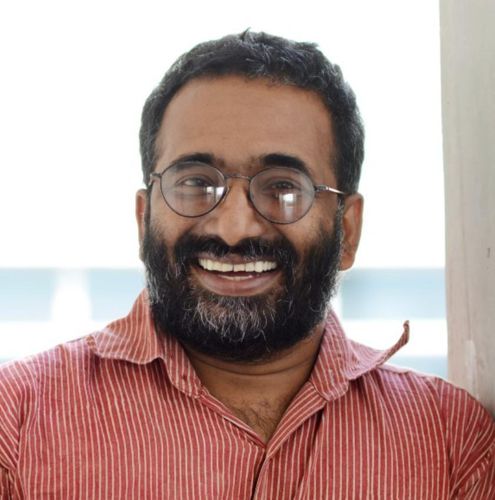
Dr Deepak John Mathew
Founding Director, HCD Institute · Professor, IIT Hyderabad · Nodal Head, DIC Hub

Mathew Sebastian
Founding Director, HCD Institute · Fellow, DIC Hub

Marsukola Kranthi Kiran
Researcher, DIC Hub
Curriculum information last updated: 5 November 2026.
Institutional partnership journey
Five steps, one institution.
HCD Institute manages the entire institutional engagement, from the first conversation to the annual review.
01
Consult
An initial consultation with your school management.
02
Assess
We assess your institutional requirements and academic objectives.
03
Propose
A programme demonstration and a customised institutional proposal.
04
Agree
An MoU and implementation plan with HCD Institute.
05
Launch
Programme launch, monitoring through the year and an annual review.
From pilot to whole school
Start with one class
A pilot class of about 30 runs as a five-day block. After the pilot review, the programme extends across grades; the timetable option opens from 100 students, in cohorts of 30.
Co-branding
"HCD Lab @ School by HCD Institute"
Use the line "HCD Lab @ School · HCD Institute, DIC Hub, IIT Hyderabad" on your lab wall, prospectus, website and brochures, as agreed in your MoU.
Annual academic review
Every year, together
HCD Institute reviews the year with your leadership: student work, jury results, teacher progress and plans for the next year. DIC Hub experts take part in the review.
Connected with CBSE
At CBSE's national summit
HCD Institute, represented by Mathew Sebastian, took part in CBSE's 4th National Summit on Facilitating School to Work Transition. HCD Lab supports CBSE's own design subject; it is not a CBSE programme.
Institutional partnership model
Commercial terms are agreed with each school.
HCD Lab @ School follows an institutional partnership model. Programme scope, implementation requirements and commercial terms are determined through consultation with each school. A customised institutional proposal is shared following an initial discussion.
Every board
Whichever board you follow, design is already in it.
CBSE, IB, Cambridge, ICSE and the UK and UAE curricula all ask schools to teach students to design for real people. HCD Lab gives every board the same foundation: understanding the people a design is for, finding the real problem, and testing ideas against evidence. It runs alongside your board's own subject, in the same grades.
- CBSE · Design Thinking & InnovationA skill module in Classes 6–8 and skill subjects 422 (Classes 9–10) and 848 (Classes 11–12), which schools can introduce free of charge.↗
- IB · MYP DesignStudents solve design problems by inquiring, developing and creating solutions, and testing them.↗
- IB · DP Design TechnologyA revised course built around the design thinking process and the needs of end users. First teaching August 2025, first assessment May 2027.↗
- Cambridge · IGCSE Design & Technology (0445)Students design and make products with user needs in mind, and apply problem-solving to design challenges.↗
- UK national curriculum · Design and technologyKey Stages 1–3: pupils design and make products that solve real and relevant problems for particular users.↗
- CISCE · ICSE and ISCICSE (Class 10) and ISC (Class 12) schools. HCD Lab adds the thinking that comes before building: what to make, and for whom.↗
- UAE · Ministry of EducationDesign and Technology introduced as a subject from Grade 3, announced in 2018.↗
CBSE schools: see Circular 49/2022 for the Classes 6–8 module, the curricula for subject 422 and subject 848, and CBSE's Skill Education page.
HCD Lab is a programme of HCD Institute, DIC Hub, IIT Hyderabad. It supports these subjects but is not a qualification of any board, and it does not replace a board's own assessment.
FAQ
What principals and parents ask us.
Is this about building products or starting businesses?
Is it only for students heading into science or engineering?
Will children spend more time on screens?
How do you stop students using AI to do the work?
Which boards does it work with?
Can we start with one class?
How are students assessed?
What happens to the projects after the jury?
Do we need a special lab?
Is this only for schools with an Atal Tinkering Lab or STEM lab?
Can we give more days?
Who helps students when they build something?
Which teachers can be trained?
How long does the programme run?
Who teaches it?
Who are the facilitators?
Will it disturb board exams?
Do we have to give full days?
How often do HCD Institute faculty come to the school?
Will this add to students' project load?
How does it compare with leading international schools?
What language is HCD Lab taught in?
What if a student misses sessions, or the school cancels one?
Are scholarships available?
What happens after the first year?
Does HCD Lab help with college admissions?
What is included?
Which teachers can join the Faculty Training Programme, and is it included?
What do students get?
Can students get internships?
Internships, incubation and admission pathways are selective, and never a guaranteed outcome of taking part.
More answers for parents, schools and students: all questions about HCD Lab, or download them all as a PDF.
Child safety
Every child safe, supervised and heard.
Safeguarding · PoSH
Background-verified adults, constant supervision and a same-day response to every concern.
Our Child Safety & Safeguarding Policy covers every school programme, residential immersion, online session and apprenticeship, including our commitments under the POCSO Act, 2012 and the PoSH Act, 2013.
Start with a 30-minute conversation