
Learn
Schools
Practice
Research
Public-sector digital accessibility
Digital accessibility for government, built around the people who use it.
We help public-sector organisations assess digital accessibility, navigate regulatory requirements, engage people with disabilities, prioritise improvements, and build accessibility into the way digital services are designed and governed.

Why this matters now, and keeps mattering
Accessibility has become a government operating requirement, not a one-time project.
Across the United States, Europe, the UK, India and beyond, governments are facing growing legal and policy expectations for accessible digital services. The rules differ by jurisdiction, but WCAG has become a common technical reference point across many accessibility regimes. The underlying goal is the same: people should be able to use the public services they depend on. Government services are human systems, and an accessible one simply does its job for every resident. That expectation doesn't expire on a deadline; it becomes the way public services are built.
The HCD difference
Most accessibility programmes check a standard. We ask whether the service works.
Most programmes ask
"Does the website meet WCAG?"
HCD asks
"Can people actually use the service?"
01
Compliance
02
Evidence
03
Human experience
04
Institutional capability
Accessibility is a research discipline before it is a checklist.
Services · The HCD Government Accessibility Method
Assess. Plan. Engage. Sustain.
Not fifteen services: one method in four steps, from first assessment to sustained capability. Simple enough for a city manager, sophisticated enough for a procurement officer.
01 · Assess · Know where you stand.
Digital Accessibility Assessment
WCAG 2.1 AA assessment · Automated + manual testing · Assistive-technology testing · Website & app assessment · Document accessibility · Gap analysis · Risk prioritisation
02 · Plan · Know what to do next.
Accessibility Strategy & Roadmaps
ADA Title II readiness · Accessibility roadmap · Remediation planning · Accessibility policy · Governance · Accessibility standards · Procurement requirements · Vendor evaluation
03 · Engage · Test with the people who use the service. Our distinctive strength.
Human-Centred Accessibility
Disability-inclusive research · Focus groups · Usability testing · Stakeholder workshops · Service-journey research · Accessibility co-design. We test real government journeys with the people who use them: screen-reader, keyboard, magnification, voice-control and cognitive-accessibility users.
04 · Sustain · Make accessibility part of how government works.
Accessibility Governance & Capability
Accessibility policies · Training · Content governance · Procurement guidance · Acceptance criteria · Monitoring · Re-testing · Continuous improvement
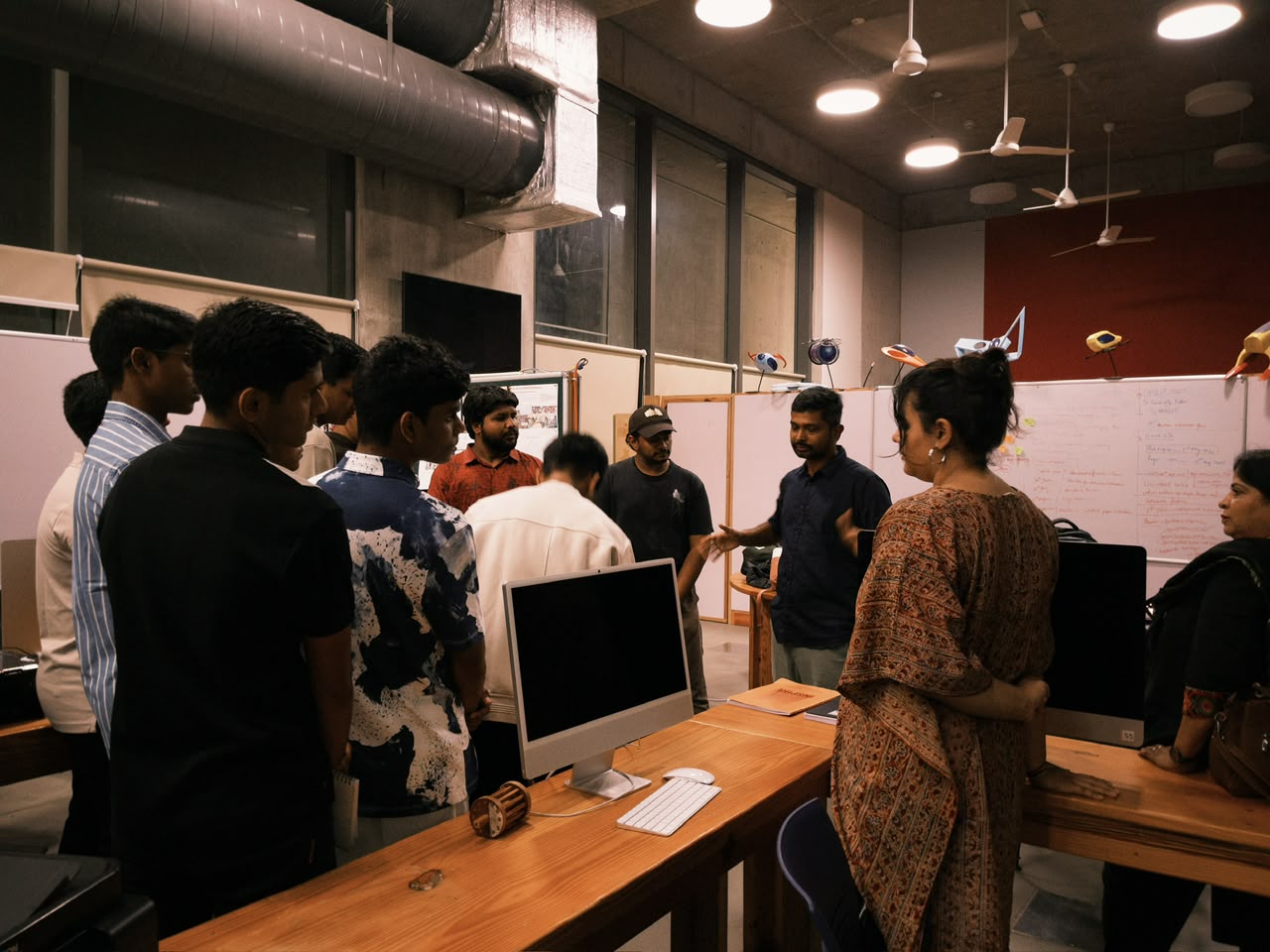

The test that matters
Accessibility isn't about pages. It's about whether a resident can complete the journey.
A page can pass a scan while the task fails. We follow the whole journey, the way a resident actually experiences it, and ask a simple question at every step: could they finish?
01
Find information
02
Understand it
03
Complete the form
04
Submit
05
Receive confirmation
Application · Accessible Website Refresh Advisory
Planning a website refresh? Build accessibility in; don't check for it at the end.
Modernising a public website is the moment to get accessibility right. We advise public agencies through the whole refresh, so the new site is accessible on launch day, not retrofitted after a complaint. We guide the work; your team or your web vendor builds it, with us setting the bar and verifying it.

Why public agencies work with HCD
The qualities that shape every engagement.
Human-centred
We involve the people who rely on public services.
Evidence-led
Findings are grounded in research, testing and WCAG criteria.
Government-aware
We understand procurement, stakeholders, governance and public accountability.
Disability-inclusive
People with disabilities aren't an afterthought in testing.
Built to last
We build internal capability, not just fix today's violations.
United States
ADA Title II Digital Accessibility.
ADA Title II · WCAG 2.1 AA
For U.S. state & local government.
ADA Title II makes accessible digital services a requirement: conformance to WCAG 2.1 Level AA. We take you the whole way: assess the estate, plan the path, engage the residents who use your services, guide remediation, and build the governance to sustain it.
- Assess · WCAG 2.1 AA
- Engage · Residents & people with disabilities
- Sustain · Governance & procurement

Expanding to the EU, UK, Canada and Australia.
Experience
Selected work across delivery and accessibility.
Public-sector delivery · Enfin: Radiology & pathology report integration
- ClientA public-sector healthcare organisation in radiology and pathology, with decades of patient care.
- ChallengeEvaluate concordance between structured radiology and pathology reports and integrate the findings into one unified report.
- What we didDesigned and ran a proof of concept; systematic data extraction and comparative analysis; built a streamlined, unified report, from concept to deployment.
- OutcomeMore accurate, comprehensive diagnostic information; redundancies removed; improved concordance and efficiency.
Accessibility & universal design · HCD Institute: Building accessible, inclusive systems
- Universal AccessAccessibility audit & certification practice (India).→
- Universal Design diplomaWith MG University & IUCDS.→
- GUDC 27Global Universal Design Conference.
- CurriculumHCD innovation curriculum & universal-design programmes; human-centred design curriculum adopted by MG University.
Research
State of Government Digital Accessibility.
Forthcoming
HCD Institute is building an evidence base on accessibility across public-sector digital services: assessing a sample of U.S. government websites against WCAG, by tool and by hand, across the resident journeys that matter.
We compare what automated tools find against what human testing finds, and answer the question no dashboard does: can a resident actually complete the task?

Built for public procurement
We work the way government buying actually works.
Work with us directly, through an existing contract vehicle, or as part of a prime contractor team. Government procurement doesn't run like commercial sales, so we're set up for cooperative purchasing vehicles, master agreements, eProcurement portals and prime partnerships.
Procurement-ready documentation
ACR / VPAT where applicable, WCAG conformance reporting, accessibility statements, acceptance criteria and vendor evaluation.
Who delivers this
HCD Institute, with U.S. delivery capability.
Methodology & research
HCD Institute
Accessibility methodology, disability-inclusive research and human-centred design: the framework, the testing discipline, and the standard every engagement is delivered to.
U.S. delivery capability
Delivery partner · Enfin
United States delivery and public-sector engineering capability, brought in for U.S. engagements. The contracting structure is set to fit each opportunity.
Insights
Plain answers to the questions governments are actually asking.
- ADA Title IIADA Title II, explained for municipalitiesForthcoming
- StandardsWhat WCAG 2.1 AA actually means for governmentForthcoming
- MethodWhy automated accessibility scores aren't enoughForthcoming
- ProcurementAccessible website procurement, done rightForthcoming
- ResearchTesting government services with screen-reader usersForthcoming
- RoadmapHow to prepare a digital accessibility roadmapForthcoming
Get started
Planning a website refresh or an ADA Title II programme?
Different teams, different starting points. Pick yours.
Government leaders
Turn requirements into a plan
Turn accessibility requirements into a plan and a roadmap.
Discuss your roadmapProcurement teams
Shortlist with evidence
The capabilities, deliverables and evidence you need to shortlist us.
Request our capabilitiesResearch & technical teams
See how we test
How we test real journeys, and what the sector actually looks like.
Read the researchRFP / RFQ
Already have an RFP or RFQ?
Government digital accessibility