The Largest Design Challenge in India: Indian Railways, and What Human-Centred Design Can Add Next

Mathew Sebastian
Founding Board Member, HCD Institute
Around 25,000 trains run across India every single day. They carry more people than the population of Australia, across a network that reaches from Kanyakumari to Kashmir, operated by well over a million railwaymen and railwaywomen. There is no comparable machine anywhere on earth that moves this many human beings, this cheaply, this reliably, every day, for a hundred and seventy years.
Indian Railways is not merely infrastructure. It is the country's largest shared experience — the place where a Malayali student, a Bihari migrant worker, a Gujarati trader, and a Kashmiri family occupy the same corridor for eighteen hours. Whatever the Railways designs, it designs for all of India at once.
That is why we believe it is the most important design challenge in the country. And why the work of the last decade deserves to be understood properly — not as an endpoint, but as the foundation for what design can now build on top of it.
The Hard Part Has Been Done
It has become fashionable in some circles to talk about Indian Railways only in terms of complaint. That view has not kept up with the facts.
The last decade has seen one of the largest infrastructure transformations in Indian history. Kavach, the indigenously developed automatic train protection system, has moved from pilot to production and is now commissioned across thousands of route kilometres and hundreds of locomotives — a homegrown safety technology of a class that few railway systems in the world have built for themselves. The Vande Bharat family has grown from a single trainset into a national fleet, now extending into sleeper and Amrit Bharat formats designed explicitly for long-distance, non-AC travellers rather than only premium passengers. Dedicated Freight Corridors have begun to separate goods from passenger traffic, unlocking capacity on lines that have been saturated since the 1990s. Electrification, track renewal, and speed upgrades have proceeded at a pace that would have seemed implausible fifteen years ago.
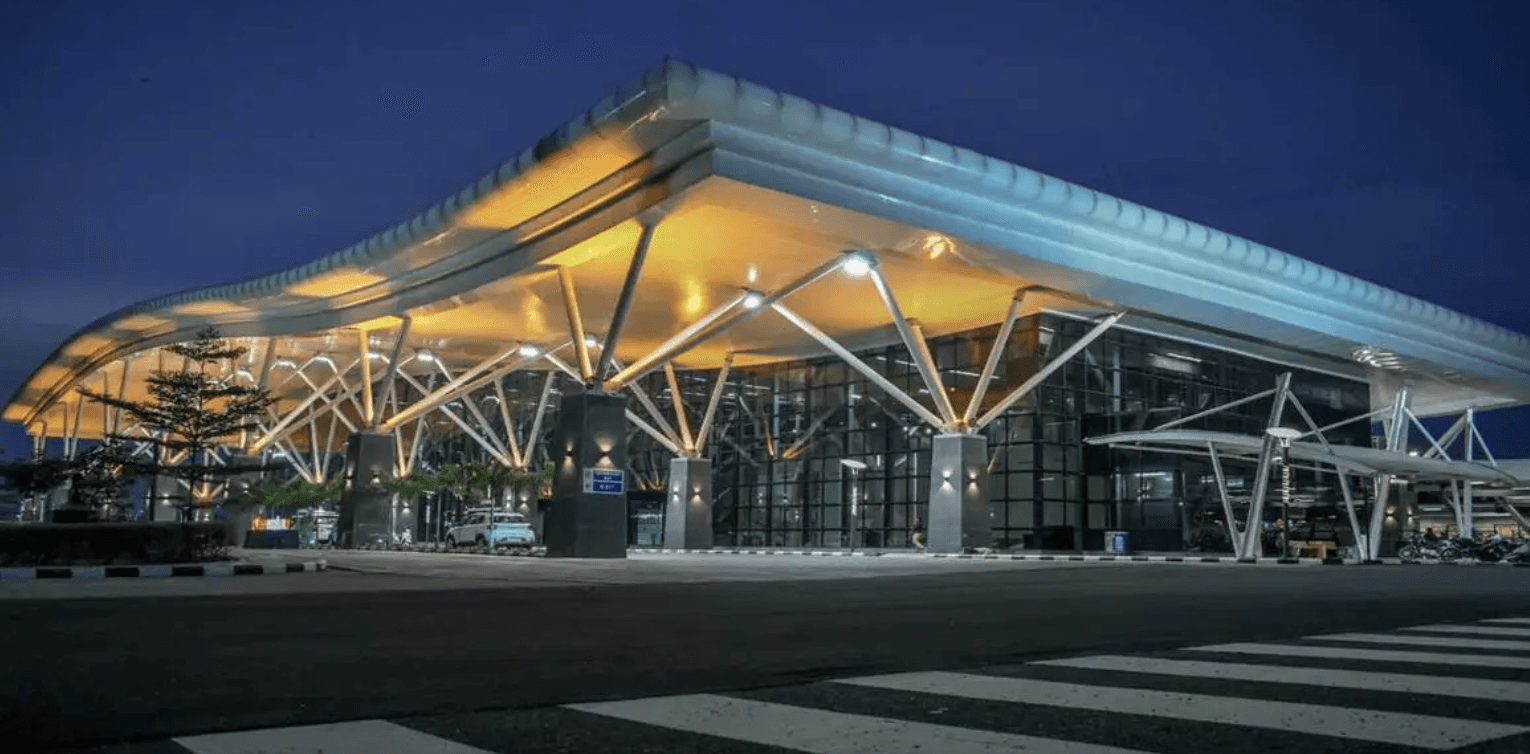
And then there is the Amrit Bharat Station Scheme — in our view the most quietly radical of them all. Launched in December 2022, it identified over 1,300 stations for redevelopment, not as isolated amenity upgrades but through long-term master plans that treat each station as a future city centre: multimodal connectivity, accessibility for Divyangjan passengers, regional architectural character, and the One Station One Product platform that turns a waiting concourse into a market for local artisans. More than 250 stations have already been completed, with works in progress at well over a thousand more.
The scale of intent here is extraordinary. A country that has historically under-invested in the everyday physical environment of ordinary citizens has decided to rebuild, all at once, the buildings through which its poorest and its richest citizens both pass.
This is the hard part. Capital, political will, engineering capacity, and execution at national scale are the things that are genuinely difficult to summon. They have been summoned.
The Next Frontier Is Experience — and the Government Has Already Said So
Here is what makes this moment interesting for anyone who works in human-centred design.
In March 2026, the Parliamentary Standing Committee on Railways recommended that the Ministry periodically assess passenger satisfaction at redeveloped Amrit Bharat stations — that building the station is not, by itself, evidence that the station works. The Committee has separately urged that station redevelopment give focused attention to crowd management, to prevent untoward incidents.
Read those two recommendations together and you have, in the language of parliamentary oversight, a precise description of a design problem.
Crowd management is not primarily a capacity question; it is a question of how people read a space under stress — where they look for information, where they hesitate, where two flows cross, what a family with luggage does when a platform change is announced four minutes before departure. Passenger satisfaction is not primarily a scorecard; it is what happens when the gap between what a building offers and what a traveller needs closes.
Both are questions about human behaviour in a designed environment. Both are exactly what human-centred design exists to answer.
The Railways has built the infrastructure. The next decade's gains — and they are large — lie in the layer between that infrastructure and the human being using it.
Why the Railways Is the Ultimate Human-Centred Design Challenge
Every design discipline has a hardest case. For human-centred design in India, this is it.
The user is everyone. Most design work optimises for a defined segment. A railway station cannot. It must simultaneously serve a software engineer with a smartphone and a first-time traveller who cannot read the destination board; a pilgrim group of forty and a woman travelling alone at 2 a.m.; a wheelchair user, a porter carrying 40 kilos, a mother with an infant and a tiffin box.
The stakes are physical. In most design work, a confusing interface causes irritation. On a platform, a confusing sign causes a person to run.
The context is adversarial to good design. Noise, crowd, fatigue, anxiety about missing a train, poor lighting, and unfamiliar language conspire against comprehension. A design that works in a calm review meeting may fail entirely at 6 p.m. on a Friday at Ernakulam Junction.
And the diversity is genuine. Seventeen languages on one route. Literacy that cannot be assumed. Digital access that varies by an order of magnitude between passengers standing next to each other.
A design that works here works anywhere. This is why we regard Indian Railways not as a problem to be criticised but as the finest school of design practice the country possesses.
Five Places Where Design Thinking Adds Value
1. Map the passenger's journey, not the department's process.
The Railways maps its processes with great sophistication. What is rarely mapped is the passenger's journey as they experience it — which begins at home, not at the station entrance, and ends at a destination, not at the exit gate. The auto-rickshaw negotiation, the search for the correct entrance, the queue at the enquiry counter, the walk to coach S7 at the far end of a 600-metre platform with a suitcase and a child, the confusion when the coach position changes.
A single door-to-door journey map, built from accompanying real passengers rather than from departmental data, routinely reveals that the worst moment in a journey is not where anyone assumed it was. This is inexpensive research with disproportionate returns.
2. Design for the extreme user, and everyone benefits.
The Amrit Bharat scheme's emphasis on Divyangjan accessibility is a genuinely important commitment, and it points at a deeper design principle: when you design for the person at the edge, you improve the experience at the centre.
Tactile paths and ramps built for wheelchair users also serve the porter with a trolley and the elderly passenger with a knee replacement. Signage designed to be legible to a person who cannot read English also works for a person reading it from forty metres away in poor light. Announcements designed for the hard of hearing become announcements that work in a noisy concourse.
The design discipline calls this inclusive design. It is one of the highest-return interventions available in public infrastructure, because the same rupee buys improvement for everyone.
3. Treat crowd flow as a behavioural design problem.
The Standing Committee's concern about crowd management is well placed, and it is solvable — but not only through more space. It is solved through the arrangement of information, sightlines, queuing structures, and decision points.
Where does a passenger first learn their platform number, and how far must they then walk? Do two crowds cross at a stairwell? Is the announcement heard where the decision is made, or thirty metres past it? Does the design accommodate the fact that people cluster near entrances and leave the far ends of platforms empty?
These are answerable questions, and the method for answering them is observation, prototyping with temporary barriers and signage, and measurement — not assumption.
4. Close the feedback loop into design, not just into redressal.
Indian Railways already collects an enormous volume of passenger feedback through its grievance systems. That is a formidable asset, and most systems use it for what it was built for: resolving individual complaints.
Human-centred design asks a second question of the same data — not "was this complaint resolved?" but "what does the pattern of complaints tell us to redesign?" A hundred separate complaints about a single station's washrooms is not a hundred maintenance tickets; it is a design brief. Building that second loop, from grievance data into station design standards, would convert an existing operational system into a permanent research engine.
The Committee's call for periodic passenger satisfaction assessment is precisely the opening for this: designed well, such an assessment is not an audit but a listening instrument.
5. Let the first stations teach the next thousand.
With over 250 stations completed and more than a thousand still in progress, the Railways holds something rare: a live portfolio of prototypes at national scale.
Every completed Amrit Bharat station is a full-scale experiment in what works. Which entrance configuration reduced congestion? Which signage system did first-time travellers actually follow? Which waiting-hall layout got used as designed, and which one filled up in an unexpected corner? Systematically harvesting those lessons — through post-occupancy studies conducted with passengers, not only with contractors — and feeding them into the design standards for the next phase would compound learning across the entire programme.
This is perhaps the single highest-leverage recommendation we would make. The scheme's phased structure is, by accident, a perfect design research programme. It only needs to be used as one.
What This Looks Like in Practice
A station design sprint is neither expensive nor slow. It takes a week.
Days one and two: a small team — station staff, an engineer, a designer, and someone from the divisional office — spends two days at the station observing rather than inspecting. They walk the passenger's route from the road outside. They accompany six or seven very different travellers: an elderly couple, a first-time traveller, a wheelchair user, a family with luggage. They record what they see, separately from what they assume.
Day three: the team frames what it found. Not "passengers are confused" but "passengers making a platform change after an announcement have, on average, ninety seconds and two unmarked decision points."
Day four: they prototype cheaply. Temporary signage in three positions. A queue barrier moved. A floor marking in tape. None of it permanent, none of it requiring sanction.
Day five: they watch what happens, and measure. Then they write down what should change in the permanent design — and what the next station should not repeat.
Five days, negligible cost, and a set of findings that would otherwise have been discovered only after the concrete had set.
Capability, Not Consultancy
The important point is that this capability belongs inside the system, not outside it.
Indian Railways has one of the most technically capable officer cadres in the Indian state — engineers of a very high calibre, with deep operational knowledge that no external consultant can replicate. What has historically not been part of their formal training is the design method: structured observation, problem framing, prototyping, and testing with users.
That is a training gap, not a talent gap. It closes with a week of good instruction and a project to apply it to.
This is the work HCD Institute does with public institutions. Our government practice — including immersive programmes delivered with IIT Hyderabad's Design Innovation Centre — exists to build human-centred design capability inside departments, so that the method stays after the trainers leave. For a system the size of the Railways, no other model makes sense: you cannot consult your way to 1,340 well-designed stations, but you can train the people who will design them.
The Argument, Simply Put
Indian Railways has spent a decade building the hardest thing to build: physical capacity, safety systems, and rolling stock, at a scale and speed few countries could manage. That achievement is real and it deserves acknowledgement rather than reflexive cynicism.
The return on that investment now depends on a different discipline. Track and signalling determine whether a train arrives. Design determines whether the journey works for the eighty-year-old, the first-time traveller, and the woman with a sleeping child.
The Standing Committee has already asked the right question: are passengers actually satisfied? Human-centred design is simply the method for answering it — rigorously, cheaply, and in a way that improves the next station rather than merely grading the last one.
The hardest part is done. The most human part is next.
Key Takeaways
Indian Railways moves roughly 25,000 trains and tens of millions of people daily — making it India's largest shared experience and its most demanding design challenge.
The last decade's investment in Kavach, Vande Bharat, dedicated freight corridors, and the Amrit Bharat Station Scheme has built the difficult foundation: capacity, safety, and infrastructure at national scale.
The Parliamentary Standing Committee on Railways has itself recommended periodic passenger satisfaction assessment and focused attention to crowd management — both are, in design terms, human-centred design questions.
Five high-return interventions: map the passenger's door-to-door journey, design for the extreme user, treat crowd flow behaviourally, convert grievance data into design briefs, and let completed stations teach the next phase.
The capability belongs inside the system. Training railway officers in design method scales; external consultancy does not.
HCD Institute works with governments and public institutions to build human-centred design capability inside the system. Explore our free HCD Toolkit — including the government collection with citizen journey mapping and field research tools — or talk to us about design capability programmes for public institutions.
hcd © 2026 All rights reserved
Privacy Policy
Terms & Conditions
The Largest Design Challenge in India: Indian Railways, and What Human-Centred Design Can Add Next
Mathew Sebastian
Founding Board Member, HCD Institute
Around 25,000 trains run across India every single day. They carry more people than the population of Australia, across a network that reaches from Kanyakumari to Kashmir, operated by well over a million railwaymen and railwaywomen. There is no comparable machine anywhere on earth that moves this many human beings, this cheaply, this reliably, every day, for a hundred and seventy years.
Indian Railways is not merely infrastructure. It is the country's largest shared experience — the place where a Malayali student, a Bihari migrant worker, a Gujarati trader, and a Kashmiri family occupy the same corridor for eighteen hours. Whatever the Railways designs, it designs for all of India at once.
That is why we believe it is the most important design challenge in the country. And why the work of the last decade deserves to be understood properly — not as an endpoint, but as the foundation for what design can now build on top of it.
The Hard Part Has Been Done
It has become fashionable in some circles to talk about Indian Railways only in terms of complaint. That view has not kept up with the facts.
The last decade has seen one of the largest infrastructure transformations in Indian history. Kavach, the indigenously developed automatic train protection system, has moved from pilot to production and is now commissioned across thousands of route kilometres and hundreds of locomotives — a homegrown safety technology of a class that few railway systems in the world have built for themselves. The Vande Bharat family has grown from a single trainset into a national fleet, now extending into sleeper and Amrit Bharat formats designed explicitly for long-distance, non-AC travellers rather than only premium passengers. Dedicated Freight Corridors have begun to separate goods from passenger traffic, unlocking capacity on lines that have been saturated since the 1990s. Electrification, track renewal, and speed upgrades have proceeded at a pace that would have seemed implausible fifteen years ago.
And then there is the Amrit Bharat Station Scheme — in our view the most quietly radical of them all. Launched in December 2022, it identified over 1,300 stations for redevelopment, not as isolated amenity upgrades but through long-term master plans that treat each station as a future city centre: multimodal connectivity, accessibility for Divyangjan passengers, regional architectural character, and the One Station One Product platform that turns a waiting concourse into a market for local artisans. More than 250 stations have already been completed, with works in progress at well over a thousand more.
The scale of intent here is extraordinary. A country that has historically under-invested in the everyday physical environment of ordinary citizens has decided to rebuild, all at once, the buildings through which its poorest and its richest citizens both pass.
This is the hard part. Capital, political will, engineering capacity, and execution at national scale are the things that are genuinely difficult to summon. They have been summoned.
The Next Frontier Is Experience — and the Government Has Already Said So
Here is what makes this moment interesting for anyone who works in human-centred design.
In March 2026, the Parliamentary Standing Committee on Railways recommended that the Ministry periodically assess passenger satisfaction at redeveloped Amrit Bharat stations — that building the station is not, by itself, evidence that the station works. The Committee has separately urged that station redevelopment give focused attention to crowd management, to prevent untoward incidents.
Read those two recommendations together and you have, in the language of parliamentary oversight, a precise description of a design problem.
Crowd management is not primarily a capacity question; it is a question of how people read a space under stress — where they look for information, where they hesitate, where two flows cross, what a family with luggage does when a platform change is announced four minutes before departure. Passenger satisfaction is not primarily a scorecard; it is what happens when the gap between what a building offers and what a traveller needs closes.
Both are questions about human behaviour in a designed environment. Both are exactly what human-centred design exists to answer.
The Railways has built the infrastructure. The next decade's gains — and they are large — lie in the layer between that infrastructure and the human being using it.
Why the Railways Is the Ultimate Human-Centred Design Challenge
Every design discipline has a hardest case. For human-centred design in India, this is it.
The user is everyone. Most design work optimises for a defined segment. A railway station cannot. It must simultaneously serve a software engineer with a smartphone and a first-time traveller who cannot read the destination board; a pilgrim group of forty and a woman travelling alone at 2 a.m.; a wheelchair user, a porter carrying 40 kilos, a mother with an infant and a tiffin box.
The stakes are physical. In most design work, a confusing interface causes irritation. On a platform, a confusing sign causes a person to run.
The context is adversarial to good design. Noise, crowd, fatigue, anxiety about missing a train, poor lighting, and unfamiliar language conspire against comprehension. A design that works in a calm review meeting may fail entirely at 6 p.m. on a Friday at Ernakulam Junction.
And the diversity is genuine. Seventeen languages on one route. Literacy that cannot be assumed. Digital access that varies by an order of magnitude between passengers standing next to each other.
A design that works here works anywhere. This is why we regard Indian Railways not as a problem to be criticised but as the finest school of design practice the country possesses.
Five Places Where Design Thinking Adds Value
1. Map the passenger's journey, not the department's process.
The Railways maps its processes with great sophistication. What is rarely mapped is the passenger's journey as they experience it — which begins at home, not at the station entrance, and ends at a destination, not at the exit gate. The auto-rickshaw negotiation, the search for the correct entrance, the queue at the enquiry counter, the walk to coach S7 at the far end of a 600-metre platform with a suitcase and a child, the confusion when the coach position changes.
A single door-to-door journey map, built from accompanying real passengers rather than from departmental data, routinely reveals that the worst moment in a journey is not where anyone assumed it was. This is inexpensive research with disproportionate returns.
2. Design for the extreme user, and everyone benefits.
The Amrit Bharat scheme's emphasis on Divyangjan accessibility is a genuinely important commitment, and it points at a deeper design principle: when you design for the person at the edge, you improve the experience at the centre.
Tactile paths and ramps built for wheelchair users also serve the porter with a trolley and the elderly passenger with a knee replacement. Signage designed to be legible to a person who cannot read English also works for a person reading it from forty metres away in poor light. Announcements designed for the hard of hearing become announcements that work in a noisy concourse.
The design discipline calls this inclusive design. It is one of the highest-return interventions available in public infrastructure, because the same rupee buys improvement for everyone.
3. Treat crowd flow as a behavioural design problem.
The Standing Committee's concern about crowd management is well placed, and it is solvable — but not only through more space. It is solved through the arrangement of information, sightlines, queuing structures, and decision points.
Where does a passenger first learn their platform number, and how far must they then walk? Do two crowds cross at a stairwell? Is the announcement heard where the decision is made, or thirty metres past it? Does the design accommodate the fact that people cluster near entrances and leave the far ends of platforms empty?
These are answerable questions, and the method for answering them is observation, prototyping with temporary barriers and signage, and measurement — not assumption.
4. Close the feedback loop into design, not just into redressal.
Indian Railways already collects an enormous volume of passenger feedback through its grievance systems. That is a formidable asset, and most systems use it for what it was built for: resolving individual complaints.
Human-centred design asks a second question of the same data — not "was this complaint resolved?" but "what does the pattern of complaints tell us to redesign?" A hundred separate complaints about a single station's washrooms is not a hundred maintenance tickets; it is a design brief. Building that second loop, from grievance data into station design standards, would convert an existing operational system into a permanent research engine.
The Committee's call for periodic passenger satisfaction assessment is precisely the opening for this: designed well, such an assessment is not an audit but a listening instrument.
5. Let the first stations teach the next thousand.
With over 250 stations completed and more than a thousand still in progress, the Railways holds something rare: a live portfolio of prototypes at national scale.
Every completed Amrit Bharat station is a full-scale experiment in what works. Which entrance configuration reduced congestion? Which signage system did first-time travellers actually follow? Which waiting-hall layout got used as designed, and which one filled up in an unexpected corner? Systematically harvesting those lessons — through post-occupancy studies conducted with passengers, not only with contractors — and feeding them into the design standards for the next phase would compound learning across the entire programme.
This is perhaps the single highest-leverage recommendation we would make. The scheme's phased structure is, by accident, a perfect design research programme. It only needs to be used as one.
What This Looks Like in Practice
A station design sprint is neither expensive nor slow. It takes a week.
Days one and two: a small team — station staff, an engineer, a designer, and someone from the divisional office — spends two days at the station observing rather than inspecting. They walk the passenger's route from the road outside. They accompany six or seven very different travellers: an elderly couple, a first-time traveller, a wheelchair user, a family with luggage. They record what they see, separately from what they assume.
Day three: the team frames what it found. Not "passengers are confused" but "passengers making a platform change after an announcement have, on average, ninety seconds and two unmarked decision points."
Day four: they prototype cheaply. Temporary signage in three positions. A queue barrier moved. A floor marking in tape. None of it permanent, none of it requiring sanction.
Day five: they watch what happens, and measure. Then they write down what should change in the permanent design — and what the next station should not repeat.
Five days, negligible cost, and a set of findings that would otherwise have been discovered only after the concrete had set.
Capability, Not Consultancy
The important point is that this capability belongs inside the system, not outside it.
Indian Railways has one of the most technically capable officer cadres in the Indian state — engineers of a very high calibre, with deep operational knowledge that no external consultant can replicate. What has historically not been part of their formal training is the design method: structured observation, problem framing, prototyping, and testing with users.
That is a training gap, not a talent gap. It closes with a week of good instruction and a project to apply it to.
This is the work HCD Institute does with public institutions. Our government practice — including immersive programmes delivered with IIT Hyderabad's Design Innovation Centre — exists to build human-centred design capability inside departments, so that the method stays after the trainers leave. For a system the size of the Railways, no other model makes sense: you cannot consult your way to 1,340 well-designed stations, but you can train the people who will design them.
The Argument, Simply Put
Indian Railways has spent a decade building the hardest thing to build: physical capacity, safety systems, and rolling stock, at a scale and speed few countries could manage. That achievement is real and it deserves acknowledgement rather than reflexive cynicism.
The return on that investment now depends on a different discipline. Track and signalling determine whether a train arrives. Design determines whether the journey works for the eighty-year-old, the first-time traveller, and the woman with a sleeping child.
The Standing Committee has already asked the right question: are passengers actually satisfied? Human-centred design is simply the method for answering it — rigorously, cheaply, and in a way that improves the next station rather than merely grading the last one.
The hardest part is done. The most human part is next.
Key Takeaways
Indian Railways moves roughly 25,000 trains and tens of millions of people daily — making it India's largest shared experience and its most demanding design challenge.
The last decade's investment in Kavach, Vande Bharat, dedicated freight corridors, and the Amrit Bharat Station Scheme has built the difficult foundation: capacity, safety, and infrastructure at national scale.
The Parliamentary Standing Committee on Railways has itself recommended periodic passenger satisfaction assessment and focused attention to crowd management — both are, in design terms, human-centred design questions.
Five high-return interventions: map the passenger's door-to-door journey, design for the extreme user, treat crowd flow behaviourally, convert grievance data into design briefs, and let completed stations teach the next phase.
The capability belongs inside the system. Training railway officers in design method scales; external consultancy does not.
HCD Institute works with governments and public institutions to build human-centred design capability inside the system. Explore our free HCD Toolkit — including the government collection with citizen journey mapping and field research tools — or talk to us about design capability programmes for public institutions.
The HCD Institute
Design Innovation Centre (DIC)
Indian Institute of Technology Hyderabad
Kandi, Sangareddy, Telangana, India – 502284
Certification
HCDx in Public Policy
HCDx in Global Supplychain